
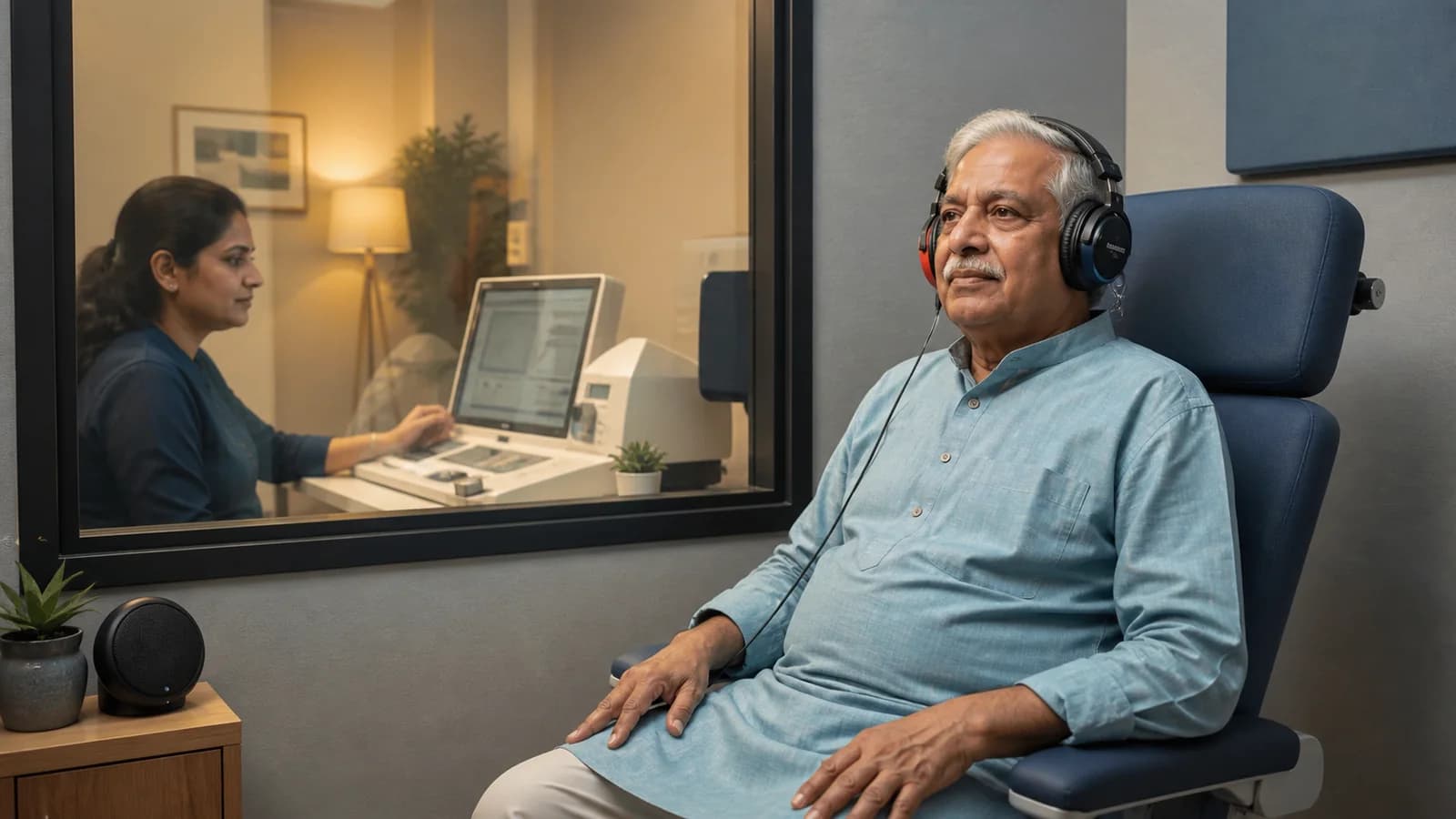
When Should You Get a Hearing Test?
Many people notice hearing difficulty first in busy restaurants, family conversations, television, or phone calls. A professional assessment can establish a baseline, explain what may be happening, and identify whether medical or hearing-care follow-up is appropriate.
Written by: Audiosen Editorial Team
Clinical review status: No named clinical review is claimed until reviewer credentials and publication consent are verified.
Signs that justify an assessment
- You frequently ask people to repeat themselves.
- Speech sounds unclear even when it is loud enough.
- Conversations in background noise require unusual effort.
- Family members comment on television or phone volume.
- You notice persistent tinnitus or a difference between ears.
- You have regular occupational or recreational noise exposure.
Do not wait on sudden symptoms
Sudden or rapidly worsening hearing loss is different from a gradual change. If hearing changes suddenly—especially in one ear—or occurs with significant dizziness, pain, discharge, or injury, seek prompt medical assessment instead of relying on an online test.
How to prepare
- Write down when the difficulty started and where it is most noticeable.
- Bring previous audiograms, relevant medical records, and a medication list if available.
- Bring current hearing aids, chargers, and accessories.
- Ask a family member to join if they can describe communication changes.
Screening versus clinic evaluation
An online screening may help you decide whether to seek care, but device volume, headphones, and room noise affect the result. It cannot diagnose the cause of hearing loss. A clinic evaluation uses appropriate equipment and professional interpretation.