
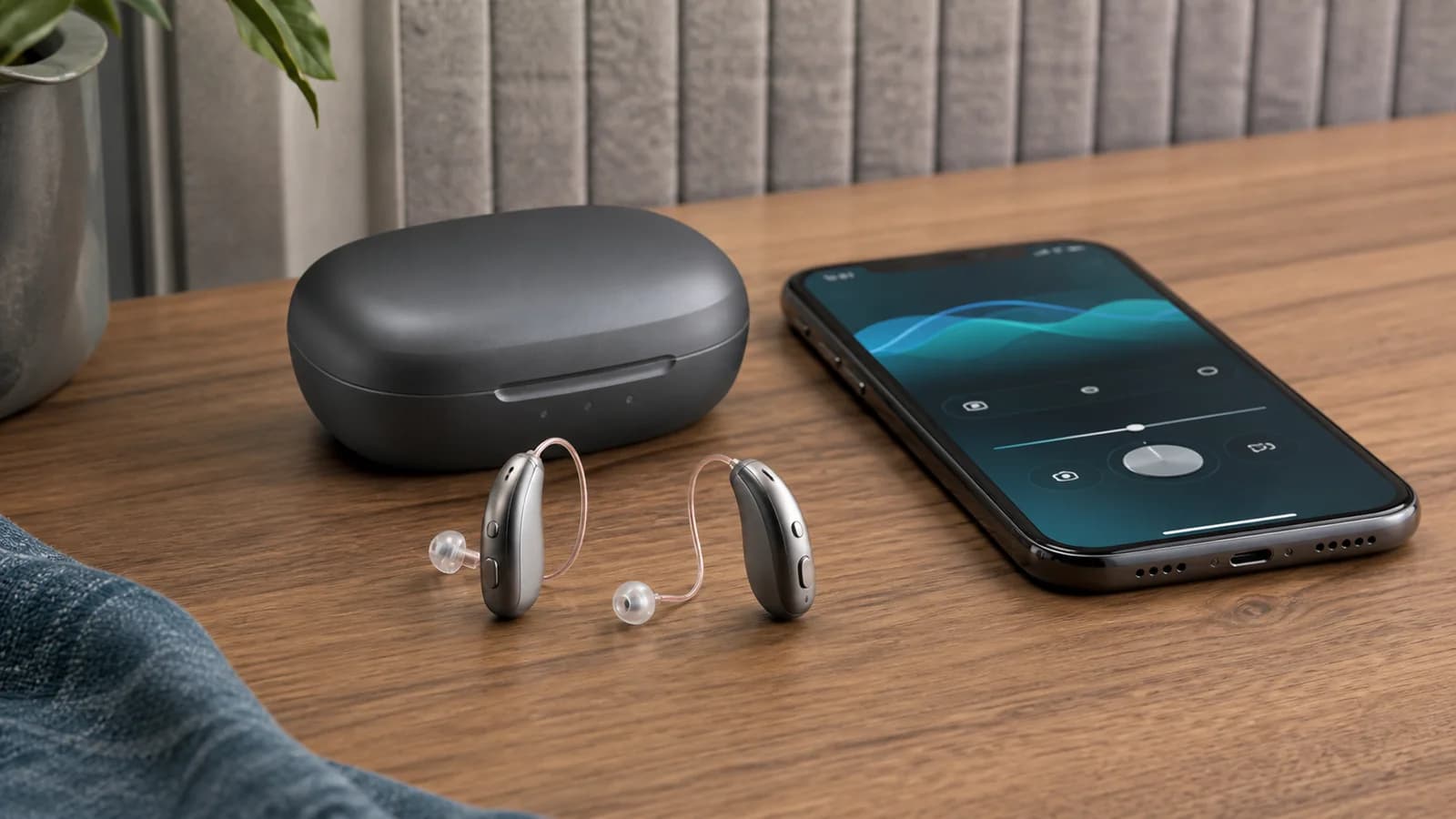
Receiver-in-canal (RIC/RIE)
A small case sits behind the ear and connects to a receiver in the ear canal. Ask about receiver strength, dome or mould choice, charging, phone compatibility, and moisture care.
A practical style comparison
Hearing aids come in different physical styles and technology configurations. The right shortlist depends on hearing results, ear health, listening needs, comfort, handling, connectivity, and the support available after fitting.
Audiosen · India-wide enquiries
Online guidance and coordination · In-person details confirmed before booking
Common styles
A small case sits behind the ear and connects to a receiver in the ear canal. Ask about receiver strength, dome or mould choice, charging, phone compatibility, and moisture care.
The main device sits behind the ear and connects through tubing or a hook. Compare size, power options, earmoulds, controls, batteries or charging, and maintenance.
Custom devices sit within the outer ear or canal. Ask about ear impressions, controls, battery or charging options, repair handling, and whether the style fits your needs.
Smaller custom styles sit deeper in the canal. Discretion can involve trade-offs in controls, handling, connectivity, battery size, and serviceability.
Some BTE or RIC configurations are designed for higher output. Output needs must be determined from hearing results and fitted with appropriate safeguards.
These systems route sound from one side to the other in specific one-sided hearing situations. They require assessment-led evaluation rather than self-selection.
Children need age-appropriate assessment, fitting, retention, safety, verification, family guidance, and regular review as needs change.
Compare charger access, expected routine, compatible phones, streaming protocols, app controls, telecoil or accessory needs, and backup arrangements.
Decision framework
Bring a current assessment when available and ask how each shortlisted configuration relates to those results.
Discuss conversations, groups, work, calls, television, travel, outdoor use, and other real listening situations.
Consider vision, dexterity, charger access, insertion, controls, cleaning, consumables, and family or caregiver support.
Confirm verification, adjustment visits, remote support, warranty, repairs, replacement parts, and the expected adaptation plan.
Common questions
There is no single best style for everyone. The appropriate choice depends on hearing and ear assessment, communication needs, comfort, handling, features, budget, and follow-up support.
No. A smaller style may affect controls, handling, battery or charging options, connectivity, output, and serviceability. Compare the complete trade-off.
No. Audiosen's online sound check is an orientation tool, not calibrated audiometry or a diagnosis. Arrange an appropriate clinical assessment before selection and programming.
Audiosen can discuss available styles and brands, subject to assessment, location, stock, service coverage, and written commercial terms.
Continue exploring
Personal guidance
Share your location, assessment reports if available, preferred style, daily listening situations, and handling needs. Audiosen can help you prepare the right questions for a qualified fitting pathway.